
There is no research in India done on topics like why people borrow, or how people invest. Here is an attempt at guessing.

There has been some improvement in prices of oilseed and gram after the central government increased their import duties

Oil imports are a third of India's total import bill.

The Economist Intelligence Unit (EIU) ranked Singapore as the priciest ahead of Zurich, Hong Kong, Geneva and Paris.

"The question of entering into Delhi is a law and order matter and will be determined by the police," the bench said.

According to the global financial services firm, FY16 would be a notable year for India with gradual improvement in economic growth and declining inflationary pressures amid falling global commodity prices and policy initiatives.
The global equity research firm said in its weekly market analysis newsletter that investors' concern over commodity prices are overblown, while no fresh rate hikes are likely in the coming months.

Any market correction, analysts say, would be an attractive entry point for risky assets, which should do well over the medium-to-long term.

Inflation is likely to drop to 5.4 per cent in FY 2014.

'Our technology is going to help Indian agriculture the way the White Revolution helped milk production.'

Two-wheeler prices are likely to rise by 10-25 per cent on account of higher premiums on insurance and commodity prices, mandatory safety regulations and BS-VI emissions that kick in from April 1, 2020.

The government's predicament is a result of its own doing: That of not ensuring adequate buy-in by the stakeholders before passage of the laws, notes Vivek Gumaste.

After unseasonal rains, supply disruptions and pandemic-induced woes pushed retail inflation well over the Reserve Bank's comfort zone in 2020, the scenario is likely to stay that way at least in the short term as economic recovery slowly gains foothold. For most part of this year, pricier food items pushed the retail inflation, based on Consumer Price Index (CPI), higher in the range of 6.58-7.61 per cent, except for March when the reading was 5.91 per cent. Experts believe retail inflation is likely to average around 6.3 per cent this fiscal and mostly will remain sticky going forward owing to pick-up in demand across sectors.

The finding is part of a research report by Deutsche Bank

Onions had the highest inflation rate among all major commodities.

'Even if the government does not implement an all-India NRC before 2024, it will be part of the party's long-term project.'

Market participants are hoping for a few tweaks on the taxation front which will encourage consumers and businesses to spend.
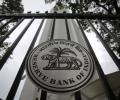
By no means do economists see the Reserve Bank of India stop at just a 25-bp cut. Some of the economists such as Soumyakanti Ghosh of State Bank of India are of the firm view that rates have room to fall by a total of 75 bps in the current financial year, starting with 25 bps in the August 7 policy.

The report admits that converting MSP to a floor price of auction on the eNAM portal will not completely solve the problem as the current data shows that average modal prices in e-NAM mandis is lower than the minimum support price in all commodities except urad.

As if wanting to be an antidote to the coronavirus pandemic, the Indian stock market adorned carnival robes in 2021 with a tsunami of liquidity unleashed by global central banks coupled with supportive domestic policies and the world's largest vaccination drive sparking off a world-beating rally on Dalal Street, despite bouts of uneasiness over fizzy valuations. While the wider economy shuttled between recovery and relapse, dictated by multiple mutations of the virus, equity market benchmarks appeared headed in just one direction -- skywards. The dizzying upward journey has added a whopping Rs 72 lakh crore during 2021 to investors' wealth, measured as the cumulative value of all listed shares in the country, taking it to nearly Rs 260 lakh crore.

The bond market is not in a mood to reason with the Reserve Bank of India (RBI) on keeping yields low. The 10-year bond yields continued to rise for the fourth straight session to close at 6.202 per cent from its previous close of 6.135 per cent. The yield was at 6 per cent a week ago. The RBI wants the yields to remain at 6 per cent, but bond dealers say the central bank will have to step up its bond-buying programme.

Paul Romer, a New York University professor and economist

Bullion may settle with limited upside potential

'The news about the new virus strain in the UK provided them with an opportunity to take money off the table.'

'It won't help being complacent about the momentum and valuations of equities that currently exist.'

The financial and commodity markets will continue to roil, as China's growth moderates and readjustments are made.
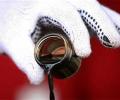
Between fiscals 2009 and 2014, India's energy import bill surged at an average 14 per cent annually to $161 billion.

The markets have been unable to sustain at higher levels as a rise in bond yields globally, especially in the US have dented sentiment. Surging commodity prices, especially crude oil that have now hit $70 a barrel (Brent) coupled with inflation woes and fear of sporadic lockdown across major economic hubs back home as Covid cases rise have chased the bulls away. In the short-term, analysts expect the markets to remain volatile as they react to news flow - both from overseas and developments back home. Investors, they say, need to keep a tab on how the US treasury yields move, which in turn will have a ripple effect on how big money moves across developed (DMs) and emerging markets (EMs), including India.

In the context of RBI's view that the real interest rate, defined as the repo rate less "look forward" CPI, should be around 150-200 basis points.

For years it has been evident that fibre and DTH would give tough competition to cable in India where regulatory overload has mutilated an already warped industry structure. OTT added fuel to the fire. From Rs 27,000 crore in 2010, cable's share of subscription revenues is now estimated at Rs 13,000 crore.

India imports three million tonnes of pulses annually to meet domestic shortages.
.jpg)
The trade deficit stood at $6.54 billion in February this year.

Indian companies will have to repay overseas debt worth $7.5 billion in the June quarter.

Rajesh Bhayani examines what SEBI's approval of diamond futures trading means for the diamond market players.
Diseases caused by unseasonal rains have ruined almost 70 per cent of the kharif onion crop in Maharashtra this year, which is responsible for the nationwide shortage of the commodity, a senior ICAR official said on Thursday.

'India has the potential to reduce its trade deficit with China by $8.4 billion in FY21.'

The studies found that sectors with the highest unaccounted income included real estate, mining, pharmaceuticals, pan masala, gutkka and tobacco, bullion and commodity markets, film industry, educational institutes and professionals.

According to D&B, food price levels might witness a rebound as foodgrain production is estimated to have declined during 2014-15.

Pragmatism and flexibility is a virtue. An untethered and short-term approach to policymaking is a flaw, argues Mihir S Sharma.
